
Why Every Growing Business Needs a Strategic Distribution Center in Houston
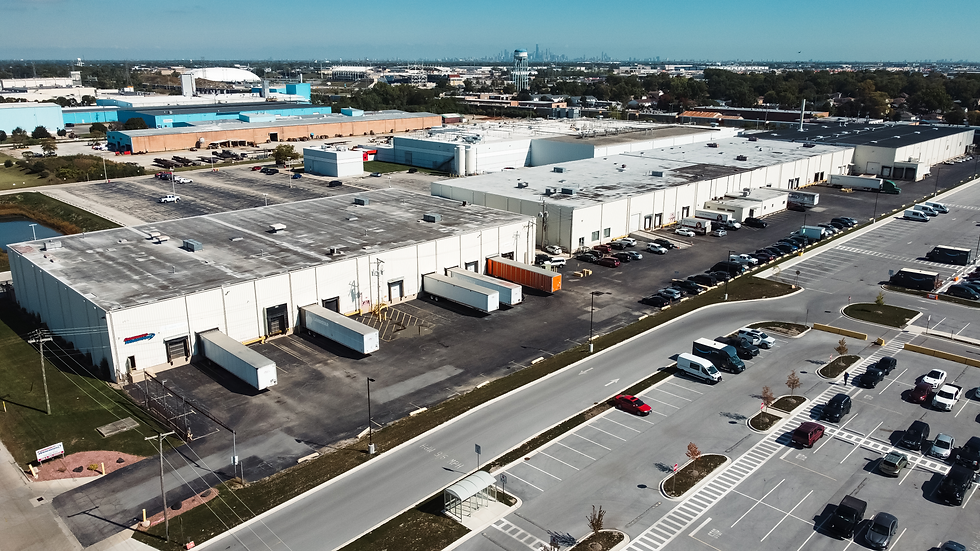
Where your products sit determines how fast they move. Businesses that grow past a certain point quickly discover that location is not just a logistical detail- it is a competitive weapon. A Houston distribution center puts your inventory at the crossroads of rail, road, sea, and air, in one of the most trade-active cities on the planet. This guide breaks down exactly why Houston keeps winning for businesses that are serious about scaling. Read on- the geography alone will surprise you.
Houston's Position Is Not an Accident
A City Built Around Movement
Houston did not become a logistics hub by chance. It sits at the intersection of six major interstate highways, two Class I railroads, and the Port of Houston- the busiest port in the United States by foreign tonnage. That kind of infrastructure takes decades to build and cannot be replicated overnight.
What "Strategic Location" Actually Means for Distribution
Strategic location in logistics refers to a geographic position that minimizes transit time, reduces freight costs, and provides access to multiple transportation modes simultaneously. Houston checks every single box, making it one of the most practical choices for businesses moving goods across the country or internationally.
The Business Case for Choosing Houston
You Can Reach Half the U.S. Population in Two Days
Ground shipping from Houston covers a massive portion of the American consumer base within 48 hours. For businesses competing on delivery speed, that two-day reach is not a perk- it is a requirement. Customers have grown impatient, and your fulfillment location directly affects your review scores.
The Port of Houston Changes Your International Game
Businesses that import raw materials or export finished goods benefit enormously from proximity to this port. The Port of Houston handles over 200 million tons of cargo annually, connecting directly to more than 1,000 global ports. That kind of access compresses lead times and simplifies international supply chains considerably.
Texas Has No State Income Tax- and That Adds Up
Beyond infrastructure, Houston's home state offers a financially friendly environment for businesses. Texas imposes no corporate income tax and no personal income tax, which means operational savings compound year after year. Lower overhead translates directly into more budget for growth, inventory, and staffing.
What Makes a Houston Distribution Center Work for Growing Businesses
Room to Scale Without Starting Over
Scalability in warehousing means the ability to expand capacity, headcount, and throughput without relocating or rebuilding from scratch. With large, accessible footprints that can accommodate rising SKU counts and seasonal inventory spikes, Houston's industrial real estate market offers lower prices than coastal locations.
A Deep Labor Market That Actually Delivers
Houston is the fourth-largest city in the United States, with a diverse and large working-age population. Finding qualified warehouse staff, logistics coordinators, and operations managers is meaningfully easier here than in smaller logistics hubs. Staffing shortages that cripple operations in other cities are far less common in Houston's labor market.
Technology and Automation Infrastructure Is Already There
Houston's logistics sector has matured enough that third-party providers, system integrators, and warehouse management technology vendors are already embedded in the market. Businesses do not need to build support networks from scratch- the ecosystem is ready and active.
Industries That Benefit Most from Houston's Distribution Reach
Energy, Retail, and E-Commerce Lead the Way
Houston has historically served the energy sector, but its distribution infrastructure is equally powerful for retail and e-commerce brands. Consumer goods companies, electronics distributors, and health product brands have all expanded their Houston footprint in recent years, drawn by the same combination of connectivity and cost efficiency.
Food and Perishables Move Faster Here
The city is a great hub for perishable goods, pharmaceuticals, and temperature-sensitive products because of its well-developed cold chain infrastructure. Quick port access and regional highway coverage mean less time in transit and better product integrity upon delivery.
The Final Word
A business that moves goods for a living cannot afford to ignore geography. Placing your operations inside a Houston distribution center means faster delivery windows, lower freight costs, international port access, and a labor market deep enough to support real growth. Houston does not just connect the U.S.- it connects the world. If your supply chain still does not run through it, that is worth reconsidering today.
FAQs
Is Houston a good fit for small businesses, or only large logistics operations?
Houston works well at every scale. Flexible warehousing options and shared facilities make it practical for small and mid-size businesses entering new markets.
How does the Port of Houston benefit businesses that only sell domestically?
Even domestic sellers benefit indirectly through lower import costs on raw materials and components, which reduces production expenses and improves overall margin.
What types of products move most efficiently through a Houston distribution center?
Consumer goods, industrial parts, food products, and e-commerce inventory all move efficiently due to Houston's multimodal transport options and cold chain capabilities.
How competitive is Houston's industrial real estate compared to other major logistics cities?
Compared to Los Angeles, New York, or Chicago, Houston regularly delivers cheaper warehouse expenses per square foot, providing expanding companies with more space for less money.
Does Houston's climate affect distribution operations or warehouse conditions?
Heat and humidity are manageable with proper facility design. Most modern Houston warehouses are built with climate considerations in mind, especially for sensitive inventory categories.


Comments